

Choosing the right mobility solution is an important step in industrial equipment design. While many engineers focus on motors, frames, or control systems, the components that support the equipment often have an equally significant impact on performance. Selecting the wrong type of caster can reduce operational efficiency, increase maintenance costs, or even affect equipment accuracy.
Industrial casters and leveling casters are two common solutions used on manufacturing equipment, automation systems, workstations, and mobile machinery. Although they may appear similar at first glance, they are designed for different operating requirements. One prioritizes smooth movement, while the other combines mobility with stable positioning after installation.
Understanding the differences between these two products helps OEM manufacturers, machine builders, and procurement engineers select the most appropriate solution for their applications.
What Are Industrial Casters
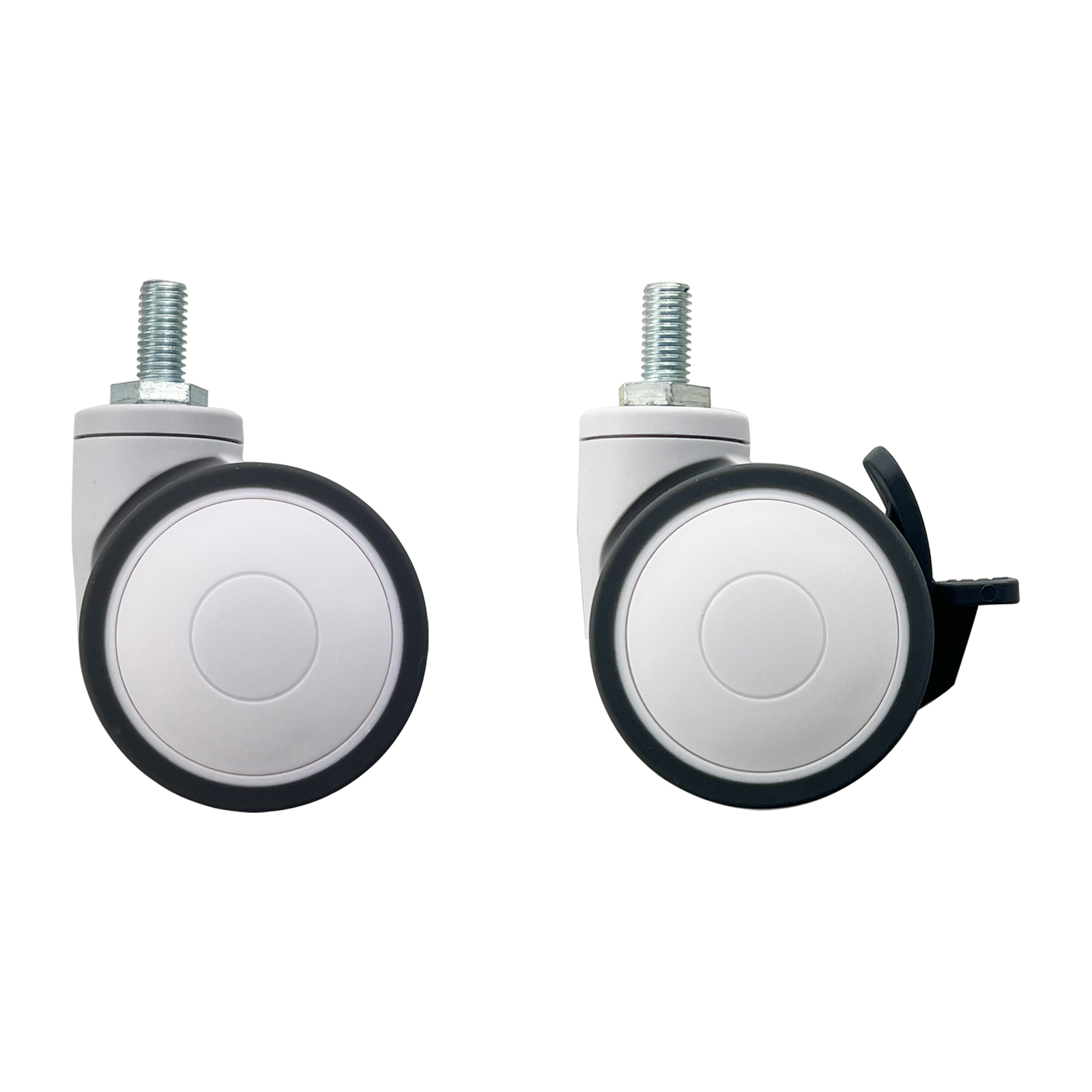
Industrial casters are designed to make equipment easy to move while supporting substantial loads. They are available in a wide range of wheel materials, mounting styles, and load capacities, making them suitable for everything from lightweight laboratory carts to heavy manufacturing equipment.
Once installed, industrial casters allow machines or workstations to be transported with minimal effort. Swivel models provide excellent maneuverability in confined production areas, while rigid casters improve directional stability when equipment follows a fixed path.
Because movement is their primary function, industrial casters are commonly found on warehouse carts, assembly stations, packaging equipment, medical devices, and mobile storage systems. In facilities where production layouts change frequently, they help reduce labor while improving operational flexibility.
What Are Leveling Casters?
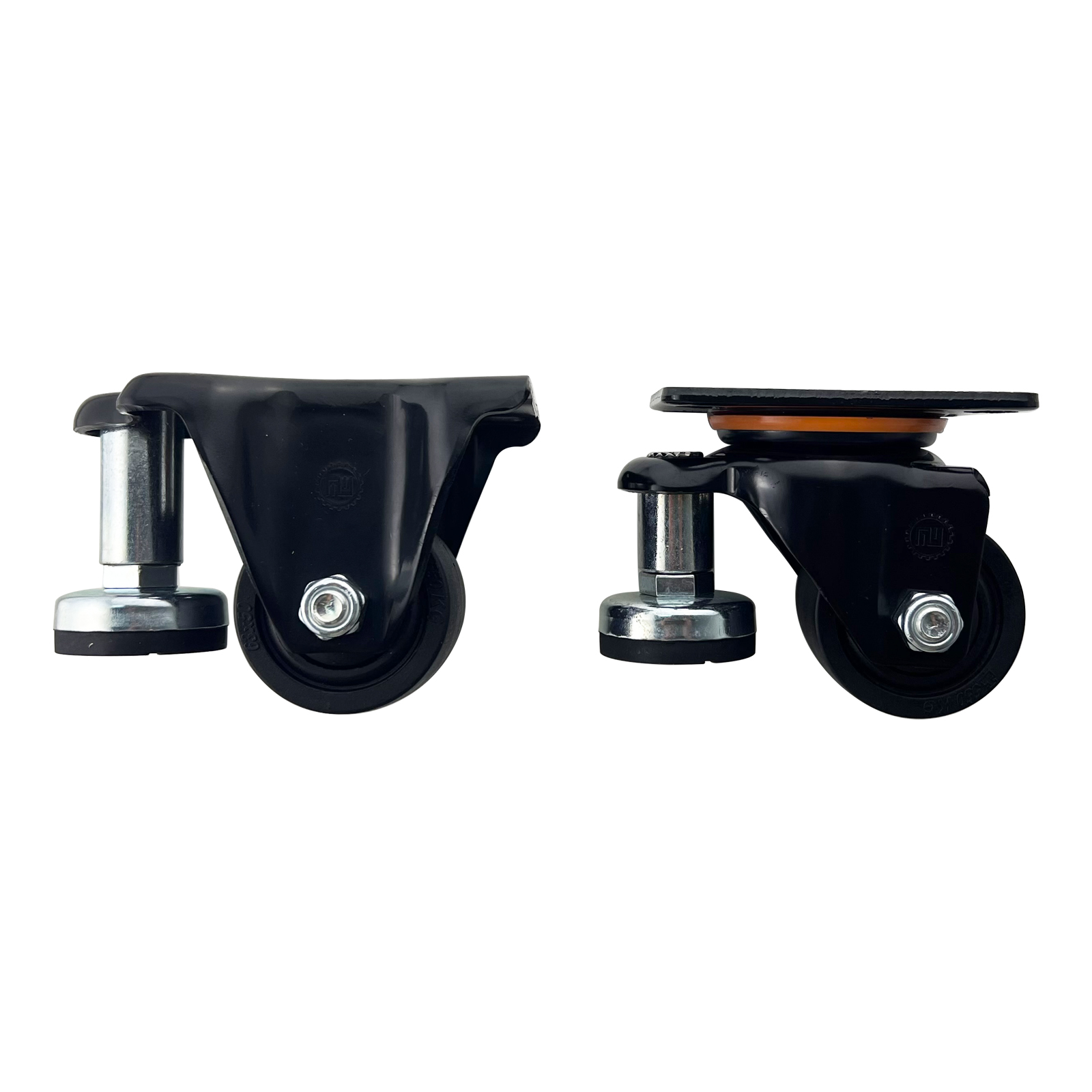
Leveling casters combine two functions in a single component. They allow equipment to move when needed and then provide a stable support point once the machine reaches its working position.
Unlike standard industrial casters, leveling casters include an adjustable foot beneath the wheel assembly. After the equipment has been positioned, the leveling mechanism is lowered until it contacts the floor. The equipment weight is then transferred from the wheel to the leveling foot, preventing unwanted movement while improving stability.
This design has become increasingly popular in modern automation equipment because manufacturers often require both mobility during installation and rigid support during operation.
The Biggest Difference Is Stability
The most important distinction between industrial casters and leveling casters is how they behave once equipment reaches its destination.
Standard industrial casters continue supporting the full machine weight even after the brakes are engaged. While locking mechanisms prevent wheel rotation, they cannot completely eliminate slight movement or vibration under heavy operating loads. For many applications, this level of stability is sufficient.
However, machines performing precision tasks often require a much more rigid foundation. Automated inspection systems, laser equipment, semiconductor machinery, and measurement devices are particularly sensitive to vibration. In these situations, leveling casters provide a clear advantage because the adjustable foot transfers the load directly to the floor.
As a result, equipment becomes significantly more stable without sacrificing the convenience of mobility during installation or relocation.
Comparing Mobility and Operational Efficiency
When equipment needs to be moved regularly, industrial casters usually offer the best overall performance. Their simpler construction reduces rolling resistance and makes transportation easier, particularly across long factory aisles or warehouse floors.
Leveling casters remain mobile during transportation, but their additional leveling mechanism increases overall complexity. Although this has little effect once properly installed, machines that require constant repositioning throughout the day may benefit from standard industrial casters instead.
For many manufacturers, the decision depends on how frequently equipment is relocated. Production carts that move continuously between workstations rarely need leveling functionality. Conversely, automated machines that are only repositioned during factory layout changes often benefit from the additional stability that leveling casters provide.
Precision Equipment Requires More Than Mobility
Manufacturing continues to evolve toward higher precision and greater automation. Equipment today is expected not only to perform efficiently but also to maintain consistent accuracy over long production cycles.
Even small amounts of vibration can affect product quality in industries such as semiconductor manufacturing, electronics assembly, laboratory testing, and optical inspection. Although industrial casters with locking brakes reduce movement, they cannot eliminate minor structural deflection caused by wheel materials or bearing assemblies.
Leveling casters solve this challenge by removing the wheel from the primary load path once the machine has been positioned. This significantly improves rigidity while reducing vibration transmitted through the equipment frame.
For manufacturers investing in high-value production equipment, this additional stability often contributes to improved product consistency and reduced maintenance requirements.
Which Industries Prefer Each Solution?
Different industries place different priorities on mobility and stability.
Industrial casters are widely used where flexibility is essential. Warehouses, logistics centers, hospitals, packaging facilities, and assembly operations often rely on mobile equipment that must be relocated quickly and efficiently.
Leveling casters are increasingly preferred in industries where equipment accuracy directly influences production quality. Automation systems, robotics, semiconductor manufacturing, electronics assembly, laboratory instruments, and precision testing equipment frequently require machines to remain completely stable during operation.
Rather than viewing one solution as universally better, manufacturers should evaluate how equipment will actually be used throughout its service life.
Factors to Consider Before Making a Selection
Before choosing between industrial casters and leveling casters, engineers should evaluate several practical considerations:
- How often will the equipment be moved?
- Does the machine require high positioning accuracy?
- Will vibration affect production quality?
- What is the total operating weight?
- What type of floor will the equipment operate on?
Answering these questions early in the equipment design process helps prevent unnecessary modifications later and ensures the selected components match operational requirements.
Selecting a Reliable Supplier
The performance of any caster system depends not only on its design but also on manufacturing quality. Precision machining, durable materials, and consistent dimensional accuracy all contribute to long-term reliability.
For OEM manufacturers, working with an experienced supplier provides additional benefits beyond the product itself. Engineering support, stable production capacity, and customization options simplify procurement while ensuring components integrate seamlessly into different equipment platforms.
Manywell supplies a wide range of industrial standard parts for machinery manufacturers worldwide. From industrial casters to leveling feet and other machine accessories, the company supports diverse industries with products designed for reliability and consistent performance.
Conclusion
Industrial casters and leveling casters are both valuable solutions, but they address different operational needs. If equipment must move frequently and efficiently, traditional industrial casters remain the preferred choice. When machines require both mobility and rigid positioning, leveling casters provide an effective combination of convenience and stability.
Rather than selecting components based solely on price or load capacity, manufacturers should evaluate the complete operating environment, including movement frequency, precision requirements, floor conditions, and equipment weight. Making the right choice at the design stage helps improve equipment performance, reduce maintenance, and support long-term operational efficiency.
If you're still evaluating caster specifications, read Heavy Duty Industrial Casters: How to Choose Wheels for High Load Equipment to learn how wheel materials, load ratings, and mounting configurations affect long-term equipment performance.
Frequently Asked Questions
Can leveling casters completely replace industrial casters?
Not always. Leveling casters are ideal for equipment that needs occasional movement and stable positioning, while industrial casters are generally better suited for applications requiring frequent transportation.
Are leveling casters suitable for heavy machinery?
Yes. Many heavy-duty leveling casters are specifically designed for industrial machinery, automation systems, and manufacturing equipment, provided the selected model meets the required load capacity.
Do industrial casters reduce machine vibration?
Industrial casters with high-quality wheel materials can absorb some vibration, but they cannot provide the same level of stability as leveling casters once equipment is in operation.
