

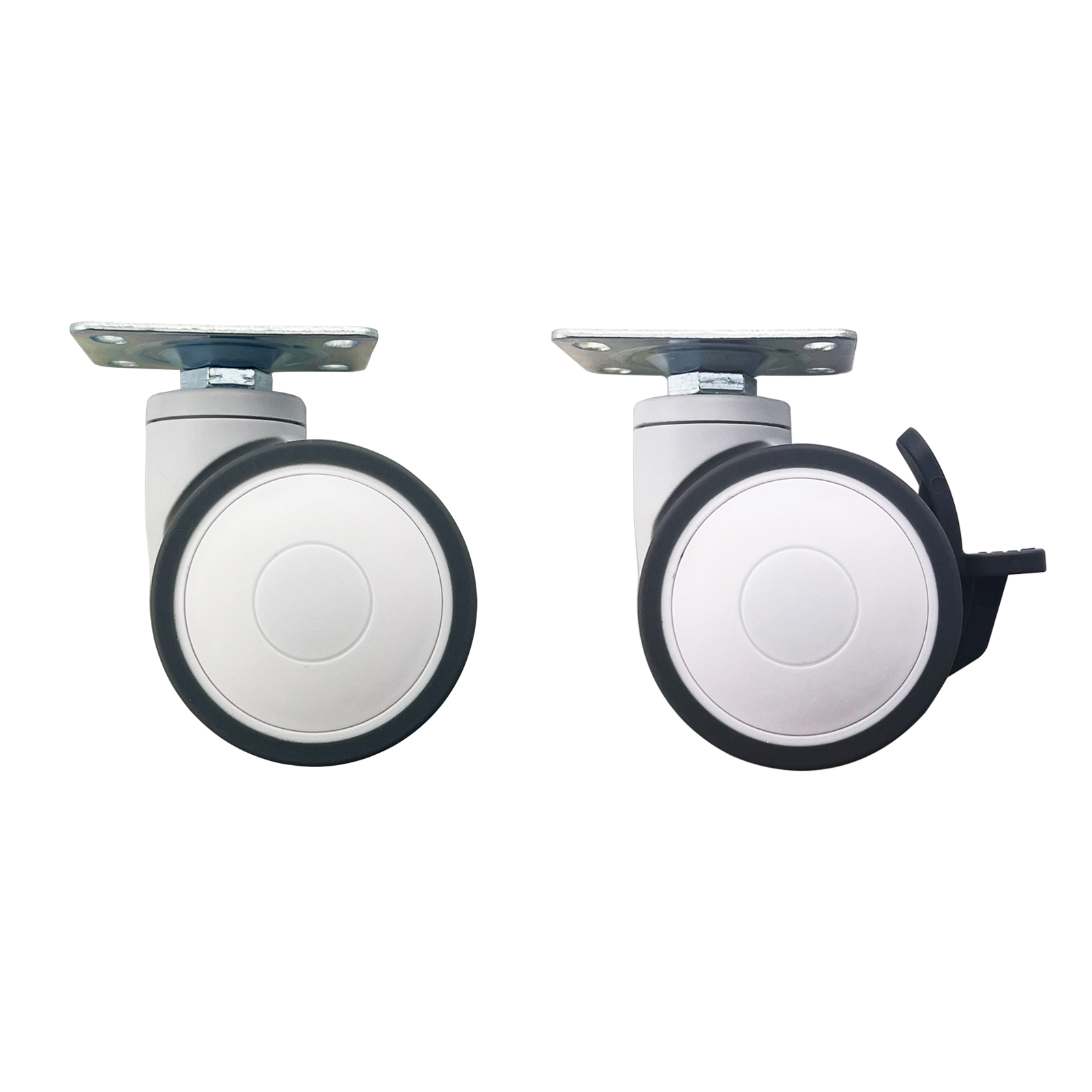
Modern industrial equipment continues to become larger, heavier, and more automated. From CNC machining centers and robotic workstations to material handling carts and semiconductor equipment, mobility systems must withstand higher loads while maintaining smooth and reliable movement.
Heavy-duty industrial casters are designed specifically for these demanding applications. Compared with standard casters, they feature reinforced brackets, larger bearings, stronger wheel materials, and higher load ratings, allowing equipment to move safely without compromising stability.
This guide explains how to select heavy-duty industrial casters by evaluating load requirements, wheel materials, mounting methods, and working environments. Whether you are designing new machinery or upgrading existing equipment, choosing the correct caster helps improve operational efficiency while reducing maintenance costs.
What Makes a Caster "Heavy Duty"?
A heavy-duty industrial caster is engineered to carry significantly higher loads than conventional caster wheels while maintaining structural integrity during continuous operation.
Several design features distinguish heavy-duty models.
- Reinforced steel yokes
- Larger precision bearings
- Thick mounting plates
- High-strength wheel materials
- Improved swivel raceways
- Enhanced impact resistance
These components work together to support equipment operating in demanding industrial environments where reliability is essential.
Heavy-duty casters are commonly installed on:
- CNC machines
- Welding equipment
- Heavy workbenches
- Industrial carts
- Automated production lines
- AGV equipment
- Energy storage systems
- Material handling platforms
Determine the Correct Load Capacity
Load capacity should always be the starting point when selecting heavy-duty casters.
Many engineers simply divide the total equipment weight by four. While this provides a basic estimate, actual operating conditions are often much more demanding.
Consider the following factors:
- Maximum equipment weight
- Additional payload
- Dynamic movement
- Floor unevenness
- Sudden impacts
- Frequency of movement
For example, an automation platform weighing 1,200 kg should not use four 300 kg casters without additional safety allowance. During movement, one wheel may temporarily carry a significantly greater portion of the load due to uneven floors or directional changes.
Selecting a higher-rated caster provides greater operational safety and extends product lifespan.
Select the Right Wheel Material
Wheel material has a major influence on rolling resistance, durability, floor protection, and environmental compatibility.
Polyurethane
Polyurethane is the preferred material for most industrial applications.
Advantages include:
- Excellent wear resistance
- Quiet operation
- High load capacity
- Good chemical resistance
- Protection for concrete and epoxy floors
It is widely used in automation equipment, logistics systems, and manufacturing facilities.
Nylon
Nylon wheels offer exceptional strength and low rolling resistance.
Recommended applications include:
- Heavy machinery
- High-temperature environments
- Clean manufacturing facilities
Because nylon is harder than polyurethane, it may produce more noise and increase floor wear.
Cast Iron
Cast iron wheels are suitable for extremely heavy loads and harsh environments.
Typical applications include:
- Steel mills
- Foundries
- Heat treatment facilities
These wheels perform best on smooth industrial floors where maximum load capacity is the priority.
Rubber
Rubber wheels provide excellent shock absorption and quiet movement but generally support lower loads than polyurethane or nylon.
They are better suited for medical equipment and sensitive laboratory applications.
Choose the Appropriate Mounting Style
The mounting system directly affects the overall stability of the equipment.
Top Plate Mount
Top plate casters are the most common choice for industrial machinery because they distribute loads evenly and provide secure installation.
Typical applications include:
- Machine frames
- Mobile workstations
- Assembly equipment
Bolt Hole Mount
Bolt hole mounting is suitable for compact equipment where installation space is limited.
Threaded Stem
Threaded stem casters simplify installation on lighter mobile equipment but are generally less common for very heavy industrial machinery.
Matching the mounting configuration to the equipment structure improves both safety and long-term reliability.
Industry Applications
Heavy-duty industrial casters support equipment across a wide range of industries.
Automation Equipment
Production lines require casters capable of supporting continuous movement while maintaining precise positioning during operation.
Semiconductor Manufacturing
Equipment used in semiconductor production often requires stable mobility combined with low vibration performance to protect sensitive manufacturing processes.
Medical Equipment
Large diagnostic systems, laboratory workstations, and mobile medical devices benefit from high-capacity casters that move smoothly and quietly.
Warehouse and Logistics
Heavy-duty carts carrying raw materials or finished products rely on durable caster systems to improve transportation efficiency while minimizing downtime.
Common Mistakes When Selecting Heavy-Duty Casters
Choosing the wrong caster can significantly increase maintenance costs.
Some of the most common purchasing mistakes include:
- Ignoring dynamic loads
- Static weight alone does not represent actual operating conditions.
- Selecting the wrong wheel material
- Hard wheels may damage flooring, while softer materials may wear prematurely under heavy loads.
- Overlooking environmental conditions
- Moisture, chemicals, high temperatures, or dust can all affect caster performance.
- Choosing price over quality
Lower-cost casters often require more frequent replacement, resulting in higher lifecycle costs.
Work with an Experienced Industrial Caster Manufacturer
Beyond product specifications, supplier capability plays an important role in equipment reliability.
An experienced manufacturer can provide:
- Stable product quality
- Consistent dimensional accuracy
- Multiple wheel material options
- OEM and ODM support
- Engineering consultation
- Reliable production capacity
- Global delivery capability
For machine builders and OEM manufacturers, working with a long-term supplier helps simplify procurement while ensuring consistent product performance throughout the equipment lifecycle.
Conclusion
Heavy duty industrial casters are more than mobility components—they directly influence equipment safety, productivity, and maintenance costs. Selecting the right caster requires balancing load capacity, wheel material, mounting configuration, and operating conditions rather than focusing solely on maximum weight ratings.
By carefully evaluating these factors and partnering with a reliable manufacturer, OEMs and industrial buyers can improve equipment performance while reducing long-term operating costs.
If you are sourcing industrial mobility solutions for automation equipment, medical devices, or heavy machinery, investing in high-quality heavy-duty casters delivers measurable benefits throughout the life of your equipment.
If you're still evaluating different caster types, read our related guide, Industrial Casters Buying Guide: Types, Materials and Load Capacity Explained, before making your final selection. This article explains wheel materials, load calculations, and application recommendations for general industrial use.
